
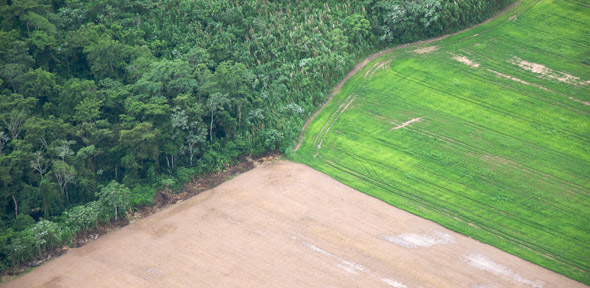
Conservation science applies scientific methods to the challenge of maintaining and restoring global biodiversity and ecosystem services. It aims to understand patterns of biodiversity and ecosystem change, pressures that are driving loss or degradation, and what the most effective and efficient responses are, at every scale from local land management to international convention.
Current research topics include:
- Conservation Evidence: summarising evidence from the scientific literature about the effects of conservation actions to support decisions about how to maintain and restore global biodiversity.
- Cambridge Centre for Carbon Credits: creating a trusted marketplace for carbon credits, with an emphasis on scaling up the supply of deforestation avoidance carbon credits in order to halt tropical deforestation.
- Global Coastal Wetlands Lab: undertaking research to further biodiversity conservation and restoration of coastal wetlands.
- Centre for Landscape Regeneration: providing knowledge and tools to regenerate British countryside using cost-effective nature-based solutions.
- Mandala: Transforming Urban Food Systems. Compiling data and evidence on the environmental impacts of food consumed in UK cities.
Key Publications
Balmford, A. 2021. Concentrating vs spreading our footprint: how to meet humanity’s needs at least cost to nature. J. Zoology 315: 79-109. DOI:10.1111/jzo.12920
Christie, A.P., Amano, T., Martin, P.A., Petrovan, S.O., Shackelford, G.E., Simmons, B.I., Smith, R.K., Williams, D.R., Wordley, C.F.R. and Sutherland, W.J. 2021. The challenge of biased evidence in conservation. Conservation Biology 35(1): 249-262. https://doi.org/10.1111/cobi.13577
Sutherland, W.J., Brotherton, P., Davies, Z., Ockendon, N., Pettorelli, N., & Vickery, J. (Eds.). (2020). Conservation Research, Policy and Practice. Cambridge: Cambridge University Press. doi:10.1017/9781108638210
Phalan, B., Green, R.E., Dicks, L.V., Dotta, G., Feniuk, C., Lamb, A., Strassburg, B.B.N., Williams, D.R., zu Ermgassen, E.K.H.J. & Balmford, A. 2016. How can higher-yielding farming help to spare nature? Science 351: 450–451.
Cuthbert, R.J., Taggart, M.A., Mohini, S., Sharma, A., Das, A., Kulkarni, M.D., Deori, P., Ranade, S., Shringarpure, R.N., Galligan, T.H. & Green, R.E. 2016. Continuing mortality of vultures in India associated with illegal veterinary use of diclofenac and a potential threat from nimesulide. Oryx 50: 104–112.
Pearce-Higgins, J.W. & Green, R.E. 2014. Birds and Climate Change: Impacts and Conservation Responses. Cambridge: Cambridge University Press.
Balmford, A. 2012. Wild Hope: on the Frontlines of Conservation Success. University of Chicago Press.